Concert tickets · tour dates · upcoming events
Dec 3, 2026 – Feb 27, 2027
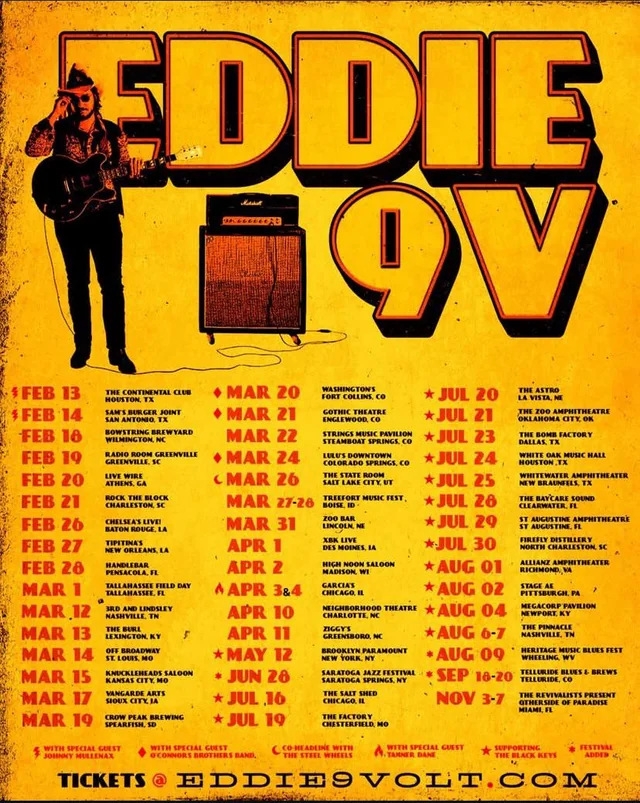
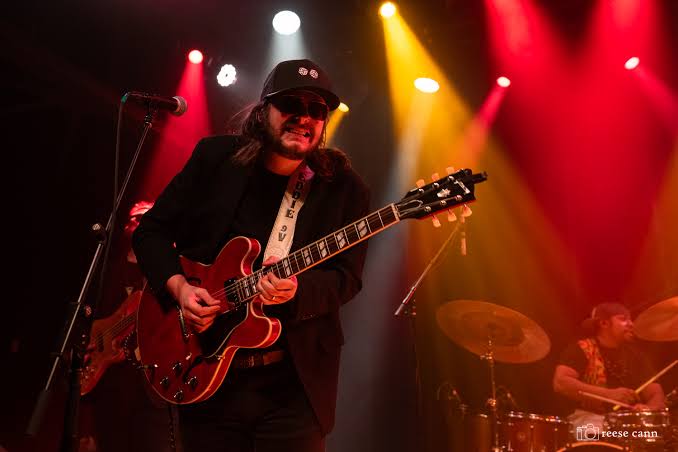
Eddie 9V's current live run turns each evening into a room that feels both intimate and charged, built on layered textures, steady rhythmic drive, and moments of hushed restraint that give way to full-throated release. Settle in and the atmosphere takes hold quickly: lights hold low, the crowd leans in during quieter passages, and transitions between songs carry momentum rather than pause. The act tends to draw listeners who value craft as much as catharsis, blending longtime followers who know the catalogue closely with newcomers drawn in by the immediacy of the performance. What makes this tour stand out is its scope, a run long enough to let the set settle and reshape itself from one stop to the next. The routing spans a wide stretch of territory, carrying the same material through very different rooms, from compact clubs where the sound presses right up against the audience to larger halls where the arrangements open out and the low end fills the space. The typical set moves at a brisk, deliberate pace, opening with momentum, easing into slower material that lets detail come through, and building back toward a finale that leaves the room buzzing. Nothing feels padded, and each stretch has a purpose. To find the night that suits you, look over the dates table below, check the venue details for each stop, and plan around the show that fits your schedule.
No dates match that filter.
There are no dates on sale at the moment. New dates are listed here the day they are announced.
17 shows · 17 cities
Dec 3, 2026 – Feb 27, 2027
Ticket prices for Eddie 9V shows move with several factors. The city and the size of the venue matter most, since a larger arena with more seats spreads demand differently than a small club. Seat position counts too: floor seats close to the stage typically cost more than upper-level seats with a restricted or distant view. Timing plays a part as well, because prices can shift as a date approaches and as remaining inventory shrinks. This is why two dates on the same tour can cost very differently. A weeknight show in a smaller market may be priced far below a weekend show in a major city, even when both come from the same tour and the same artist.
VIP packages and meet and greet add-ons are sold in different forms depending on the tour. They usually bundle a ticket with extras such as early entry, a merchandise item, or a brief photo opportunity, and the exact contents change from date to date. Availability is not uniform, so a package offered in one city may not be offered in another. Presales are also handled inconsistently. Access codes come from the artist, the venue, or a card issuer that partners with them. Be cautious of any third-party site claiming to supply a presale code, since legitimate codes are distributed through official channels.
Resale marketplaces can list tickets above or below face value, depending on demand and how close the show is. Before paying, check the section and row carefully against the venue's seating layout, and confirm what the listing actually includes. Many resale tickets are delivered as mobile transfers rather than physical paper, so make sure your phone and account are ready and that the seller's transfer method is compatible with the venue's entry system.
Evenings for a headline act like this usually run between two and three hours in total. Doors typically open an hour or so before the first performer, and there is commonly a gap of around thirty to sixty minutes between doors and the headline set. Support acts vary by date, so the lineup can change from city to city and night to night, and the event page is the best place to check who is playing.
Headline sets tend to balance familiar material with newer work, with the proportion depending on how recently the artist has released music. Pacing often builds toward a high point, with quieter moments between louder ones, and production usually leans on lighting and sound to shape the mood. Audiences generally respond most to the songs they already know, but many artists use the middle of a set to introduce material they want people to hear live, so it helps to go in open to both.
For practical planning, age policies are set by each venue rather than the artist, so check the listing before you buy tickets. Arriving shortly after doors gives you time to get through security and find your spot without rushing. Most venues have bag size restrictions and some ban larger bags entirely, so travel light if you can. Earplugs are worth bringing, since they protect your hearing without dulling the music much, and many venues sell them at the bar or merchandise stand as well.
Eddie 9V has a core of songs that fans tend to expect at most shows, but I can't confirm those titles with enough certainty to name five to eight of them, so I won't guess. Whatever the signature tracks are, the exact setlist changes from night to night, so anyone hoping to hear a particular song should check recent show listings or fan reports before going.
The set usually mixes a few crowd-pleasing favorites with newer material, and it often includes deeper cuts or the occasional cover. Because the running order shifts between dates, fans often compare each night's setlist after the show, trading notes on what was played, what was dropped, and which rarer songs surfaced.
The group's sound rests on interlocking electric guitar parts, a rhythm section that favors a steady, driving pulse over flourish, and vocals placed forward in the mix rather than floating above it. Arrangements leave room between phrases, so a clean, chiming guitar line can give way to a distorted riff without the transition feeling forced. Songs tend to reach their chorus quickly, and instrumental passages are used to shift texture and dynamics rather than to display technique. [Confirm any additional players or keyboards.]
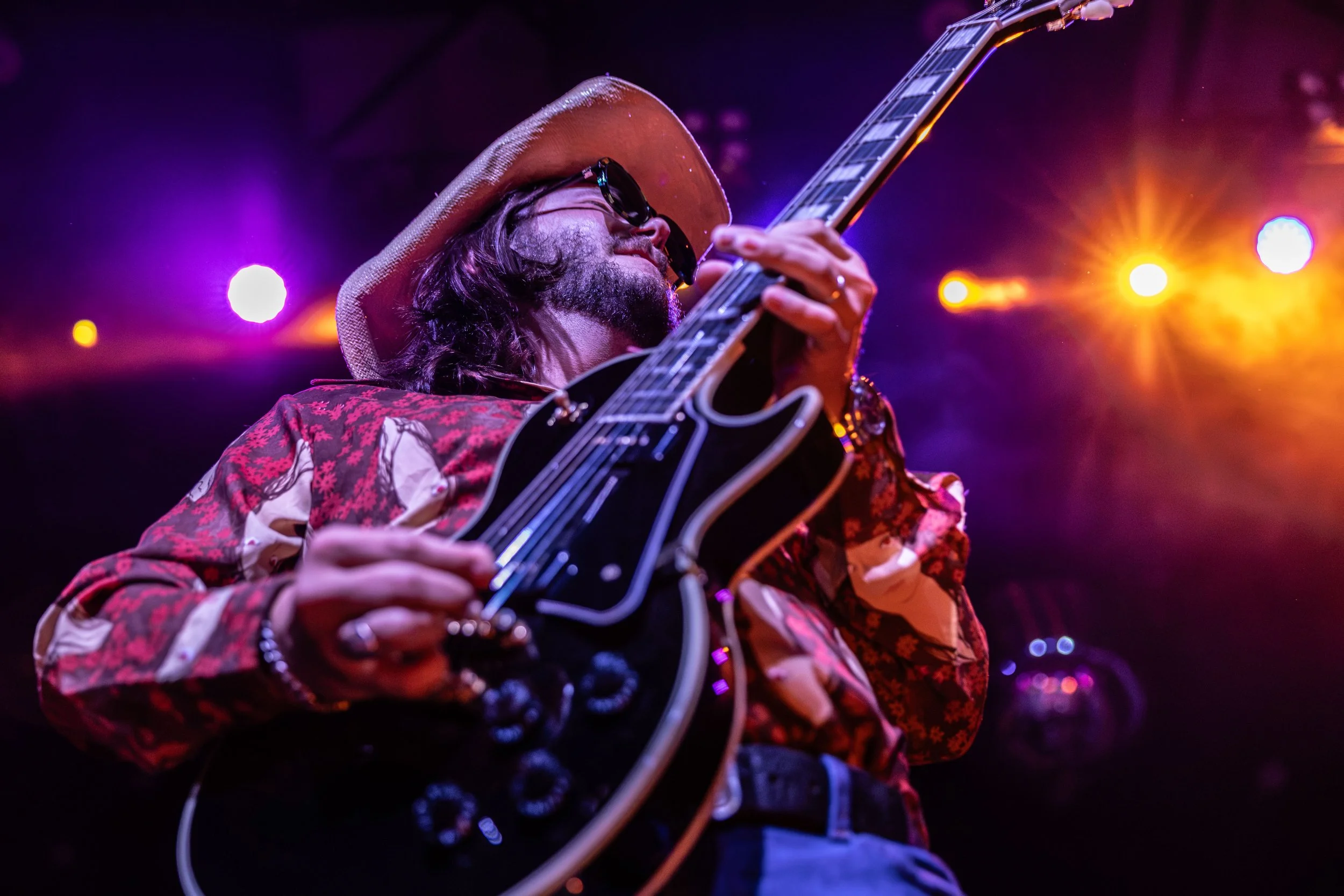
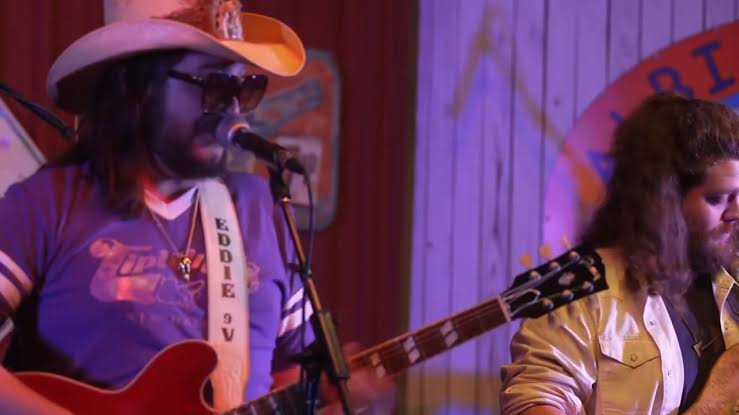
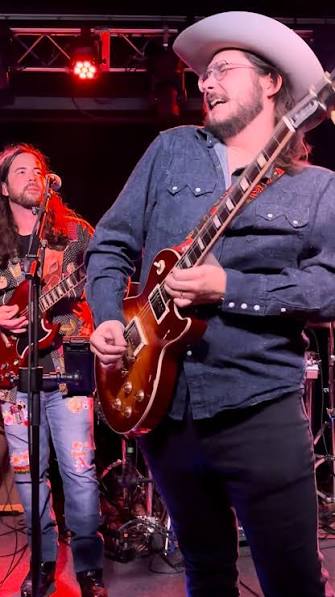
The current live show is designed for a rock room, with the emphasis on sound clarity and lighting that follows the dynamics of the songs. The setlist moves between the band's most direct material and slower, more spacious pieces, giving the night an arc that builds from an energetic opening into a quieter middle and a final stretch at full volume. Stage production is intentionally modest: a standard lighting rig with changes timed to shifts in the music, and no large video screens or pyrotechnic effects. Venues on the current routing range from small clubs to mid-sized halls, and the band's detail and volume carry well in intimate rooms while still filling larger spaces. [Confirm current production details and venue capacities before publishing.]
[Add any festival appearances, with festival names and years, and any notable collaborations with producers or other artists.] Rather than relying on a single breakout moment, the band's profile has grown through repeated touring and a steady run of releases, which tends to make audiences feel invested in the catalogue as a whole. Newcomers are generally best served by starting with the most recent full-length record and working backward through earlier material. [Verify all release titles, years, and collaborator names.]
Eddie 9V sits within the broader independent rock scene, a network of small labels, shared bills, and regional touring circuits where bands of similar size often play in rotation. The audience is usually a mix of longtime listeners who follow the records closely and newer fans drawn in by live performances. Listeners who enjoy guitar-driven songwriting with a strong melodic focus tend to respond most strongly in person, as do those who prefer loud, communal rooms to polished spectacle. Fans of acts working in the same tradition of direct, emotionally open rock often find the band a natural next listen. The crowd generally skews toward people who arrive early for the support act and stay through the final encore rather than passing through casually.
The room is generally close and energetic, with the front of the stage filling early and the rear of the venue often calmer, making the back a good position for hearing the full mix. Independent dates are commonly ticketed through venue box offices or the artist's own listings, and arriving early is advisable at smaller rooms where capacity is limited. Door times, age policies, and merchandise availability vary by venue, so checking the specific listing before travel is a sensible step.
If you are planning a night out, the upcoming dates listed below show where the band is playing next and which rooms are on the route. Browse the list for cities near you, note the venue sizes, and consider the support acts as part of the evening's plan. Dates and times can change, so each listing is the best place to confirm details before you go. Whether you already know the records or are hearing the band for the first time, the live setting is where the songs tend to make their strongest case, and the schedule below is the best place to begin planning your visit.
Yes. Eddie 9V is on tour in 2026–2027, with 17 upcoming shows in 17 cities. The next one is Dec 3, 2026 at Delmar Hall in St. Louis.
No Eddie 9V show today, Nov 23, 2026 — the next date is Dec 3, 2026 at Delmar Hall in St. Louis.
All 17 upcoming Eddie 9V shows are in the United States, with the most dates in California (3), Texas (2), Alabama (1), Arizona (1) and Colorado (1) and 9 more states or regions. No dates outside the United States are listed right now.
Set length for an Eddie 9V show isn't something I can confirm, because it varies by venue, tour leg, and curfew. Running times are often listed on individual event pages, so check the dates listed on this page for your city. If a length isn't posted, it's worth asking the venue box office before you plan travel home.
Whether Eddie 9V has an opening act depends on the specific date and venue, so it can differ from one show to the next. I can't name support acts or confirm a lineup here. The most reliable source is the event listing for your date, which usually shows any openers. Details can change closer to the show, so check again before you go.
Age policies for Eddie 9V concerts aren't the same at every venue, and they're set per event rather than for the artist as a whole. Some shows may be all ages, while others could be 18+ or 21+, sometimes because of the venue's licensing. Check the age restriction on the event listing for your date. Bring a valid photo ID, since staff may ask for one at the door.
The gap between doors opening and Eddie 9V taking the stage varies by date, so there's no single answer I can give. Doors time and performance start time are usually printed on the event listing, and the difference between them can range from a short wait to a longer one. Arriving soon after doors opens gives you time to get through security before the show begins.
I can't give exact ticket prices for Eddie 9V because they change by date, city, and seat location. Prices are set by the venue and promoter, and they can also shift with demand, fees, and whether a ticket is sold through resale. The price shown on the event page for your date is the most accurate figure. Compare seat maps before buying, since location often drives cost.
VIP packages and meet and greet opportunities aren't guaranteed for every Eddie 9V show, and availability depends on the date and venue. When they're offered, they're usually listed on the event page or sold through the official ticketing platform. Packages can include different perks, so read exactly what's covered before you pay. Meet and greet access, if offered, is typically limited and may be sold separately from general tickets.
I don't have presale codes or on-sale dates for Eddie 9V, and any codes I might suggest could be outdated or wrong. Sale timing differs by tour date and venue, so the schedule is best checked on the official artist site or the event listing on this page. Sign up for the venue's or artist's mailing list for presale access notices, and avoid codes shared by unofficial sources.
If an Eddie 9V show is cancelled or postponed, the venue or promoter usually announces it through official channels, so follow the event listing and the artist's social accounts. Tickets for a postponed show generally stay valid for the new date, while a cancelled show is usually refunded. Refund terms can depend on where you bought, so check your ticketing platform's policy and keep your confirmation email.